Organic waste, including leaves and yard debris, food waste, and inedible food scraps, is the largest category of waste found in Wisconsin landfills in the most recent statewide waste characterization study from the Wisconsin Department of Natural Resources.
Reducing the amount of organic waste that we send to Wisconsin’s landfills is an easy and impactful way to live more sustainably. Learn more about how to handle yard waste and leaves, get free compost and mulch, cut down on food waste at home, and more.
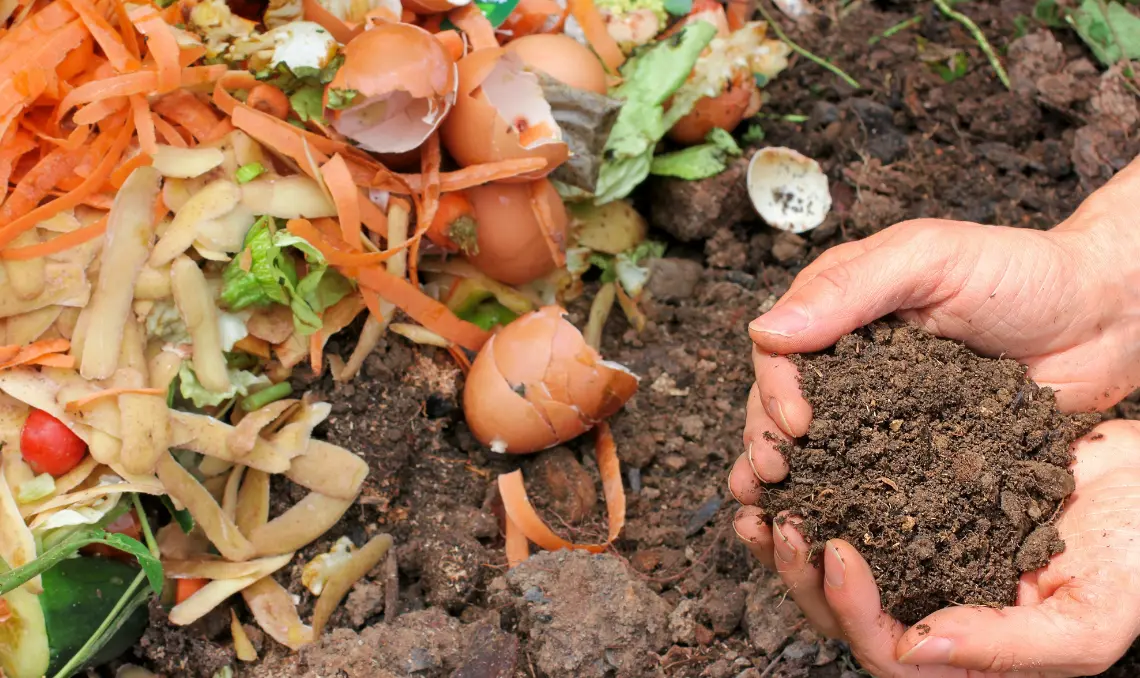
These tips and services can help you minimize waste, protect water quality, and give your yard a healthy boost, naturally.
Yard Waste Minimization
Reduce what you haul to the curb by managing yard waste where it falls:
- Grass-cycling – Remember that grass clippings are not accepted in curbside yard waste collection or at the drop off center. Leave grass clippings on your lawn after mowing for a free and environmentally friendly way to return nutrients and water to the soil.
- Leaf mulching – Shred leaves into your lawn or garden beds to improve soil health. See below for more detailed instructions and pictures.
Backyard Composting
Composting is a simple way to reduce food and yard waste, enrich soil, and support a healthier environment from your own backyard.
- Compost bin sale – Sometimes, Wauwatosa can offer deals on compost bins. Stay tuned for details on how to purchase a discounted bin.
- How to start composting – Step-by-step guides and tips for getting started.
- What to compost and what to avoid (hint: no meat, dairy, or pet waste).
Leaf Mulching Guidance
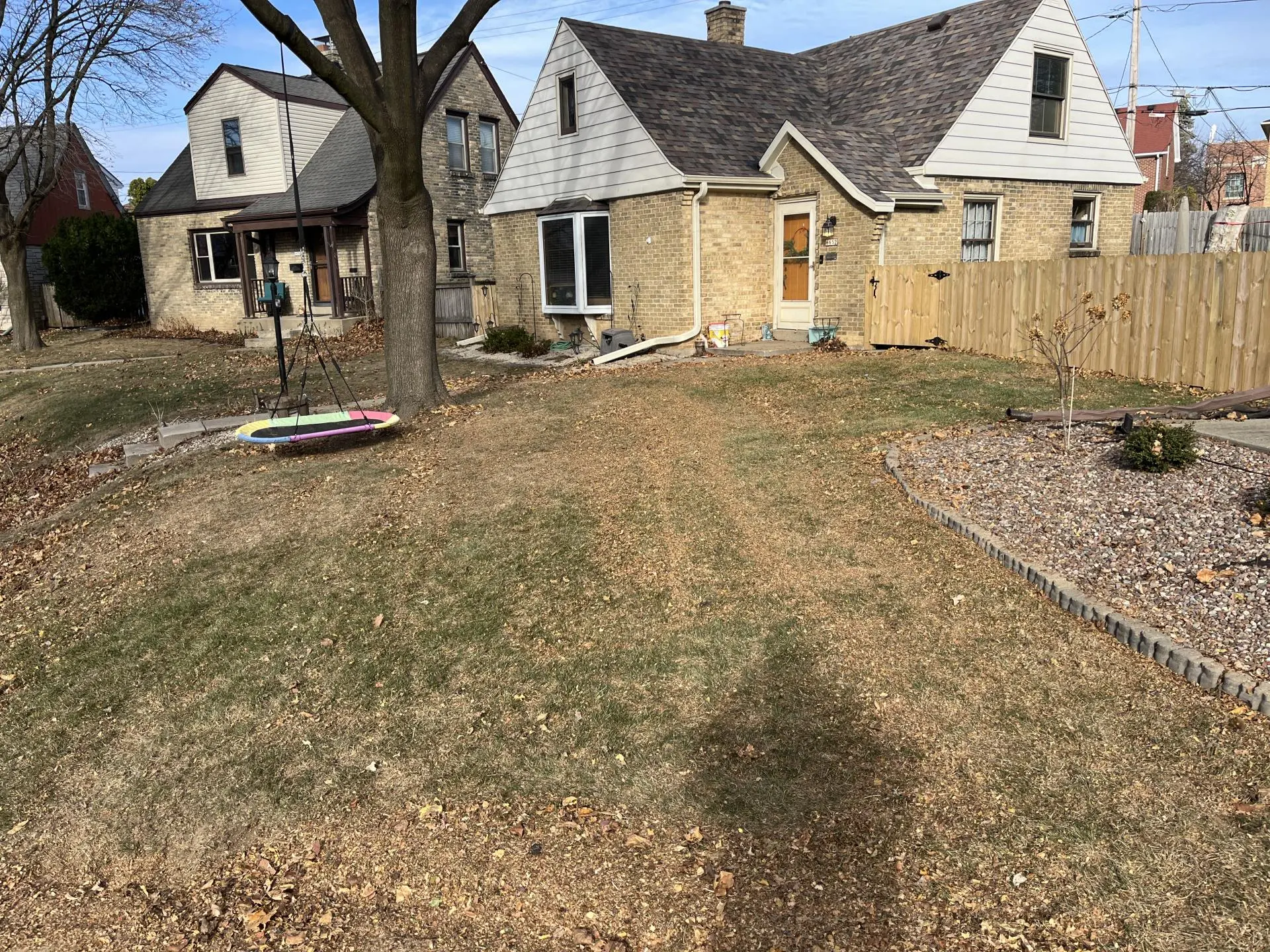
Mulching your leaves is an easy and effective way to care for your lawn and reduce waste. Instead of raking and bagging, simply run a mulching mower over dry leaves until they’re finely shredded. The goal is to break the leaves down into small pieces that settle into the grass, where they decompose and feed the soil. As shown in the image, the result is a clean, natural layer of leaf mulch that blends into the lawn.
Wauwatosa provides convenient options for getting rid of what you can’t reuse.
- Yard waste pickup (spring through fall)
- Fall leaf collection – any leaves that cannot be composted or mulched in your yard should be raked to the curb during designated weeks
- Drop Off Center – bring brush, leaves, and yard debris to the drop-off center during open hours.
Yard waste collected by the City of Wauwatosa is kept out of the landfill through on-site composting or mulching. Composted fall leaves and wood chips from city tree pruning can be picked up by Wauwatosa residents outside the Drop Off Center for free when available.
For more information, please email the Department of Public Works Operations Division or call (414) 471-8422.
Need some mulch or wood chips? These items be picked up by city residents outside of the gated area of the Drop Off Center when available at no cost. You do not need a permit to collect these items.
- Leaf Mulch is made from composted fall leaves, and can be used as soil conditioner in gardens or lawns
- Wood Chips of various sizes are made from city tree pruning and/or removal.
For more information, please email the Department of Public Works Operations Division or call (414) 471-8422.
Private Compost Service
The City of Wauwatosa partners with Compost Crusader – a company that offers curbside compost collection in our area. Go to compostcrusader.com to see if there is availability in your neighborhood to sign up.
Contact Us
For more information, please email the Department of Public Works Operations Division or call (414) 471-8422.
Although food waste is generated throughout the food supply chain, according toReFED, the largest portion of wasted food (35% or 26 million tons annually nationwide) occurs in homes. This means that we can all play a part in reducing the amount of food and other organic waste that we send to landfills by rethinking how we purchase, store, prepare, donate, and discard food.
Resident Resources
- Wauwatosa food pantries accepting donations:
- Natural Resources Defense Council’s Save the Food– tools and resources including a food storage guide, meal and grocery planning, and recipes to make the most of ingredients that are past their prime
- Wisconsin DNR’s Reducing Food Waste at Home– information and tips on understanding date labels, food storage, and more
- EPA’s Preventing Wasted Food at Home– tips and resources as well as more details on the connection between wasted food and climate change
- Too Good to Go Next Gen– downloadable educational materials for children aged 6-11 about food waste and how to avoid it
Restaurant resources
Wauwatosa’s restaurants and food businesses can also play a significant role in reducing food waste sent to landfills.
- Wisconsin DNR– Reducing Commercial and Community Food Waste
- EPA– Food Loss Prevention Options for Restaurants
- ReFED Food Waste Action Guide for Restaurants
- ReFED/CIA– best practices for reducing food waste through the power of creative repurposing
- James Beard Foundation-an online course by the James Beard Foundation designed to introduce the topic food waste reduction methods into working kitchens everywhere.
- WWF-operational guidance for addressing food waste, providing tools and step-by-step guidance for executives, chefs, managers, and staff to measure and manage waste
Private Compost Collection Services in Wauwatosa
Wauwatosa residents can connect with private companies for paid curbside food waste collection for composting.